When and how does one become infected with Helicobacter pylori?

DOSSIER

  26/11/2022 | Alexandra BRESSON


Facebook Twitter Mail Imprimer
 
This article is also available in the following languages:
 

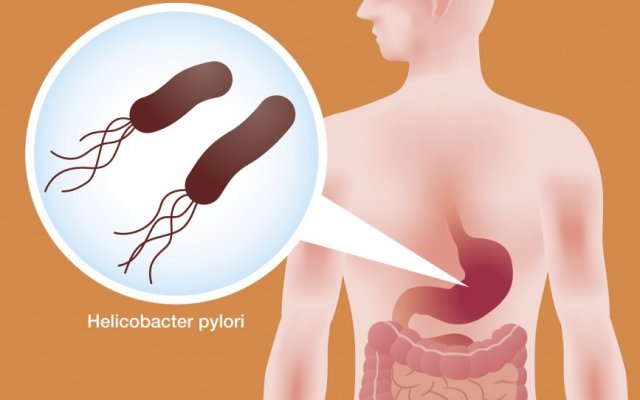
Helicobacter pylori. Behind this unusual name lies a bacterium that colonizes the gastric mucosa. Its ability to withstand extreme acidic conditions allows it to thrive within this organ. If the name doesn't ring a bell, Helicobacter pylori infection is nonetheless widespread globally: it colonizes the stomachs of half the world's population. In France alone, its prevalence is between 15 and 30%, although the frequency varies according to age group.

Infection is most likely during childhood, primarily in the first five years, due to poor hygiene or close contact with others. Direct contact with stomach secretions, such as regurgitation or vomiting, is a major contributing factor. Saliva is another possible source of infection, which is why children who frequently put objects in their mouths can become infected through contact with other children, for example, within the same family or daycare. However, since Helicobacter pylori only develops in the stomach, this bacterium is much less easily transmitted than others.

It should be noted that the risk of infection in adulthood is very low, although standard hygiene measures, particularly washing hands before cooking and eating, remain essential. The vast majority of people infected with Helicobacter pylori are asymptomatic and will therefore not develop any health problems. However, although silent, the infection can lead to gastritis, a chronic inflammation of the stomach lining that persists for life if left untreated. Most often without specific symptoms, it can sometimes cause digestive discomfort and pain, signs that should be taken seriously.

As health authorities warn, Helicobacter pylori infection can progress from gastritis to more serious conditions that may appear years later. These include ulcers, which are more or less deep sores in the stomach lining, and stomach cancer. Eliminating the bacteria helps clear up the inflammation of the stomach lining, and with it, the ulcers and other digestive problems. Infected individuals are treated with antibiotics, along with medication to reduce stomach acid.

This treatment, lasting 7 to 14 days, cures the infection in 80 to 90% of cases.

  Alexandra BRESSON


Alternative and complementary medicine: the government wants to regulate university degrees

 NEWS 


 27/05/2026

In France, the presence of university degrees linked to unvalidated healthcare practices is worrying healthcare professionals, who are denouncing the growing influence of "alternative medicine" in higher ...


Sweden achieves its tobacco-free goal!

 NEWS 


 25/05/2026

Sweden became a "tobacco-free" country in 2025, with only 4.8% of daily smokers, compared to 16% in 2003. Around 10% of adults smoked at least once in the past month, with women aged 50 to 84 remaining ...


Minced steaks recalled across France

 NEWS 


 22/05/2026

Carrefour Extra frozen minced steaks are being recalled nationwide due to the risk of metal fragments. The alert was published Thursday on Rappel Conso, the official platform dedicated to hazardous products. The ...


When and how to undergo a superficial peel

sample74

▶ REPLAY

Available to listen

Want to give your skin a radiant boost and improve its elasticity with a superficial peel? Yes, provided you choose the right technique and take a few pre


 25/05/2026

Sweden achieves its tobacco-free goal!

Sweden became a "tobacco-free" country in 2025, with only 4.8% of daily smokers, compared to 16% in 2003. Around 10% of adults smoked at least once in the past month, with


 NEWS 

  19/05/2026

France: Getting a doctor's appointment is becoming more difficult in nearly half of the departments

Waiting times for medical appointments in France are not increasing everywhere, but disparities between regions and specialties are widening, according to a study by the Jean-Jaurès


 NEWS 

  18/05/2026

The young Frenchman Elio has found his bone marrow donor and will be able to receive a transplant.

The battle of 4-year-old Elio, who suffers from a rare form of leukemia, had already captivated social media. Last night, his parents announced a decisive breakthrough on


 NUTRITION 

  12/05/2026

Ultra-processed foods: cardiologists raise the alarm

Ultra-processed foods are taking up an increasingly large portion of our plates. Convenient and inexpensive, they are nevertheless associated with increasingly well-documented


 NEWS 

  11/05/2026

Listeria: Contaminated shrimp recalled across France


 NEWS 

  06/05/2026

Flu: towards mandatory vaccination for healthcare workers


 NEWS 

  04/05/2026

Hantavirus: WHO investigates at sea


 SOCIAL 

  30/04/2026

France halts non-surgical FemBloc sterilization


 SOCIAL 

  28/04/2026

Quality of care in France: the Court of Auditors raises the alarm


Contenus sponsorisés


NOS RADIOS


SERVICES


THEMATIQUES


OUTILS


Radio Public Santé
Public Santé Seniors
Public Santé Détente
Public Santé Loisirs & Sports
Public Santé Famille
Public Santé Sexo
Public Santé Nutri-Conso
Public Health Radio
Bien-être Animal
Replay News
Replay News Eco
Replay News Story


Frequencies
Replay
Programs
Find
Contact us
Health news
Webradios
Seasonal Diseases


Beauty
Nutrition
Family
Hobbies
Prevention
Psychology
Research
Treatments
Sport
Administrative & social
Litterature
Sexology
Animal health


Flux RSS
Facebook
X (Twitter)
Linkedin
Newsletters
Services
Journalists
Technical
Press


Rights of reproduction and distribution reserved © Control Channel 2006-2026
Strictly personal use. The user of the site acknowledges having read the usage rights license,
in accept and respect its provisions.

Mentions légales | Conditions générales d'utilisation | Politique de protection des données personnelles | Politique relative aux cookies